
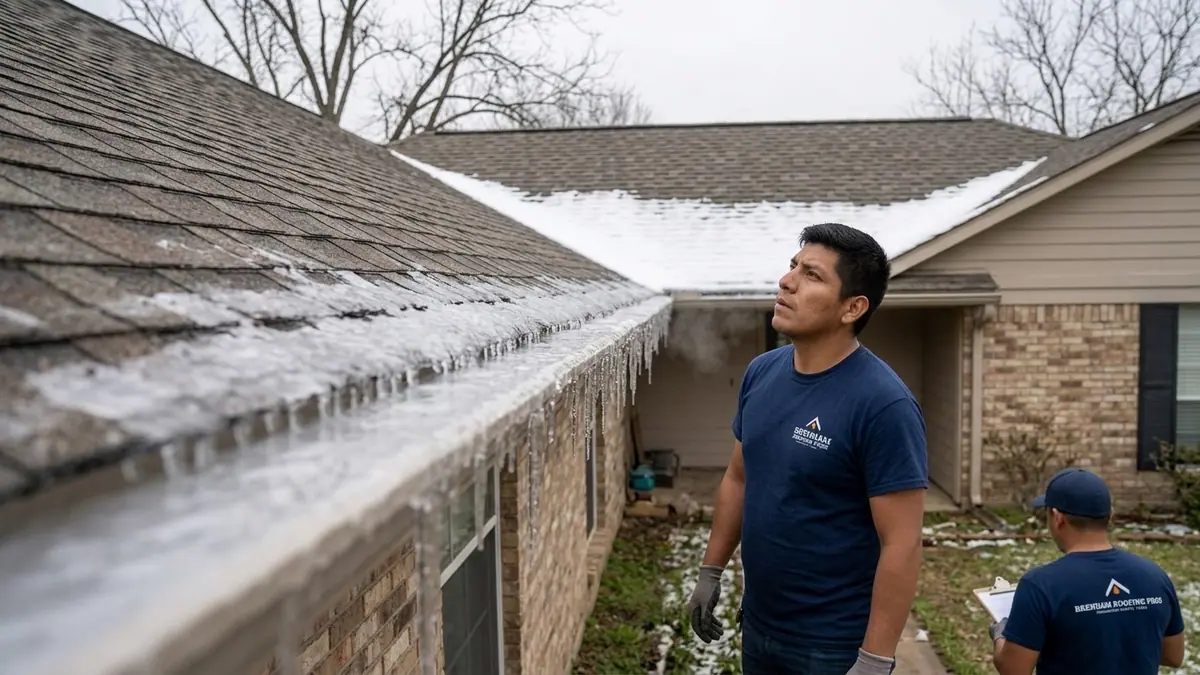
What did the 2021 winter actually bring here?
Snow first, then ice, five weeks apart. The National Weather Service record for Washington County lists a winter storm beginning 10 January 2021 that dropped one to three inches of snow and sleet across inland Southeast Texas, averaging about two inches. A separate ice storm beginning 17 February 2021 produced freezing rain with up to 0.15 inches of ice accretion measured on branches.
Neither figure threatens a roof structurally. Two inches of snow weighs a fraction of the live load a roof framed to the residential code carries. The damage from these events reaches the details rather than the frame.
What does a freeze event do to a roof built for heat?
It exercises four details that a hot climate never tests. Sealants contract and open, meltwater backs up at a cold eave, aged asphalt turns brittle enough to crack underfoot, and gutters carry an ice load they were never sized for. None of it threatens the frame.
- Sealant joints contract. Caulk and mastic at flashing and penetrations shrink in the cold and open hairline gaps that close again as the temperature rises, leaving a slightly larger gap each cycle.
- Water backs up at eaves. Snow melting on a warm roof and refreezing at a cold eave puts water under the covering, uphill of where it drains. Ice damming is rare in Texas and it happens.
- Brittle asphalt cracks. Aged shingles lose flexibility in the cold. Foot traffic on a frozen roof cracks tabs that would flex in July.
- Gutters take a load they were not sized for. Ice in a trough weighs several times what water weighs, and hangers pull away from the fascia.
What should be checked afterward?
Four things, in the first dry week after a freeze: the penetrations, the eave line, the gutters and their hangers, and the attic. Freeze damage announces itself weeks later at the next heavy rain, which is exactly why the connection gets missed.
- Every penetration, for sealant that opened and did not close.
- The eave line, for lifted shingles and any backed-out fasteners where water sat and refroze.
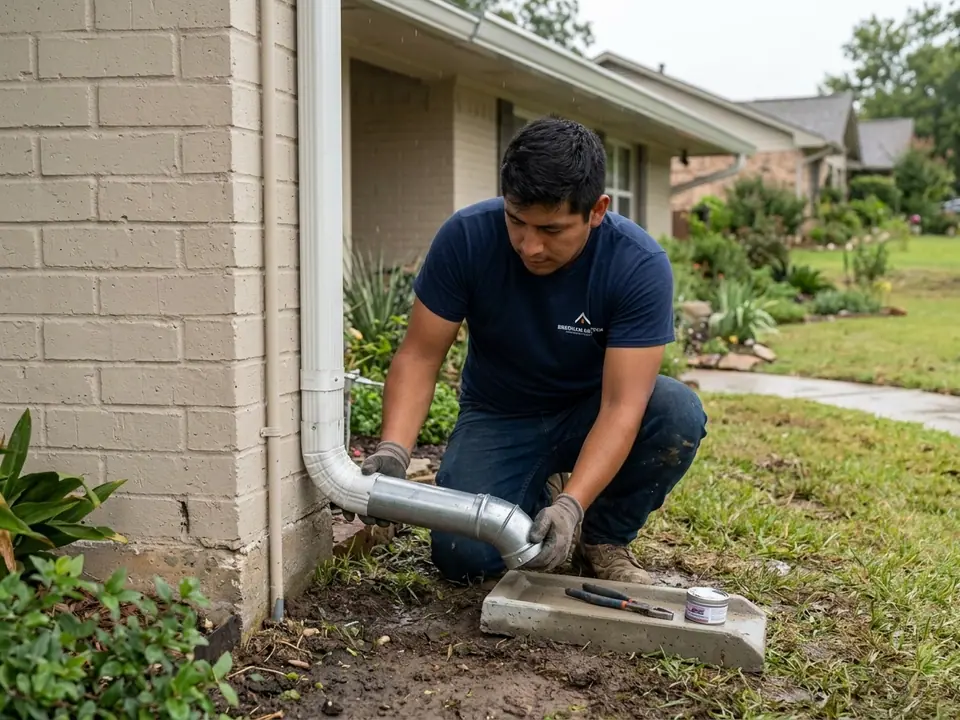
- The gutters and their hangers, for trough that has pulled away from the fascia under ice weight — trough and hanger work is its own job.
- The attic, for staining that appeared during the thaw rather than during a rain event.
Damage from a freeze usually announces itself at the next heavy rain, weeks later, which is why the connection gets missed. A dated inspection in the dry window afterward ties the two together.
Does the plumbing question belong here too?
Attic pipework is a roofer's problem the moment it bursts. Inland Texas houses run supply lines through unheated attic space, and the February 2021 freeze made that a statewide lesson. A burst line above the ceiling arrives looking exactly like a roof leak: a spreading ceiling stain with water coming through.
Telling them apart is straightforward. Roof water arrives during or shortly after rain. Plumbing water arrives regardless of the weather, and it keeps arriving. Shut off the main and watch whether the flow stops before calling about the roof, and start leak tracing once the plumbing is ruled out.
What this means for material choice
Freeze exposure is not a reason to change covering in Washington County. The events here are short, shallow and infrequent, and neither asphalt nor metal fails structurally under them. The one practical adjustment is at the eaves: self-adhered membrane at the eave line and in the valleys handles both the wind-driven rain that this county does get regularly, and the rare backed-up meltwater that it does not.