
What does Class 4 actually mean?
It is the top rating in UL 2218, an impact test that drops a two-inch steel ball onto the shingle from twenty feet. A Class 4 product takes two such hits without the mat cracking or fracturing. The classes below it use smaller balls dropped from lower heights.
The test measures resistance to a puncture-style impact. It does not promise the shingle will not dent, and it does not rate wind performance, which is a separate standard.
What Texas requires of insurers
Every property insurer selling homeowner policies in Texas has to offer a premium credit for a roof covered in impact-resistant material passing UL 2218. The requirement dates to a 1998 mandate by the Texas insurance commissioner, and Texas was the first state to impose one.
Three things the mandate does not do:
- It does not set the amount. Each carrier decides its own credit, so quotes vary widely between insurers for the same roof.
- It does not apply the credit automatically. The homeowner requests it and supplies documentation.
- It does not stop a carrier attaching conditions, which is where the real trade sits.
The paperwork the credit depends on
Many Texas carriers ask for TDI Form PC068, the impact-resistant roofing installation form. The roofing contractor completes it and the homeowner submits it to the agent, along with the product documentation showing the UL 2218 class.
Get this agreed before the job rather than after. A contractor who has never filled one in is a contractor whose customers did not claim the credit.
The cosmetic exclusion trade
Carriers frequently condition the full discount on accepting an endorsement that excludes cosmetic damage. That endorsement means dents which do not affect the roof's ability to shed water stop being a covered loss.
Read that against the local record before signing. Washington County's largest recorded stone in eleven years measured 1.50 inches. That size dents soft metal and bruises aged asphalt, and dents are precisely what a cosmetic exclusion removes from cover.
The exclusion matters most on metal, where hail damage is usually cosmetic by nature. On asphalt, fractured mat is functional damage and stays covered either way.
Does the upgrade pay in a low-hail county?
The hail case is weak here and the premium case carries it. Impact-resistant asphalt runs $5.40 to $8.64 per square foot installed against $5.00 to $9.50 for standard architectural, so the upgrade is modest. Six hail events in eleven years is not an argument for paying it on damage-avoidance grounds.
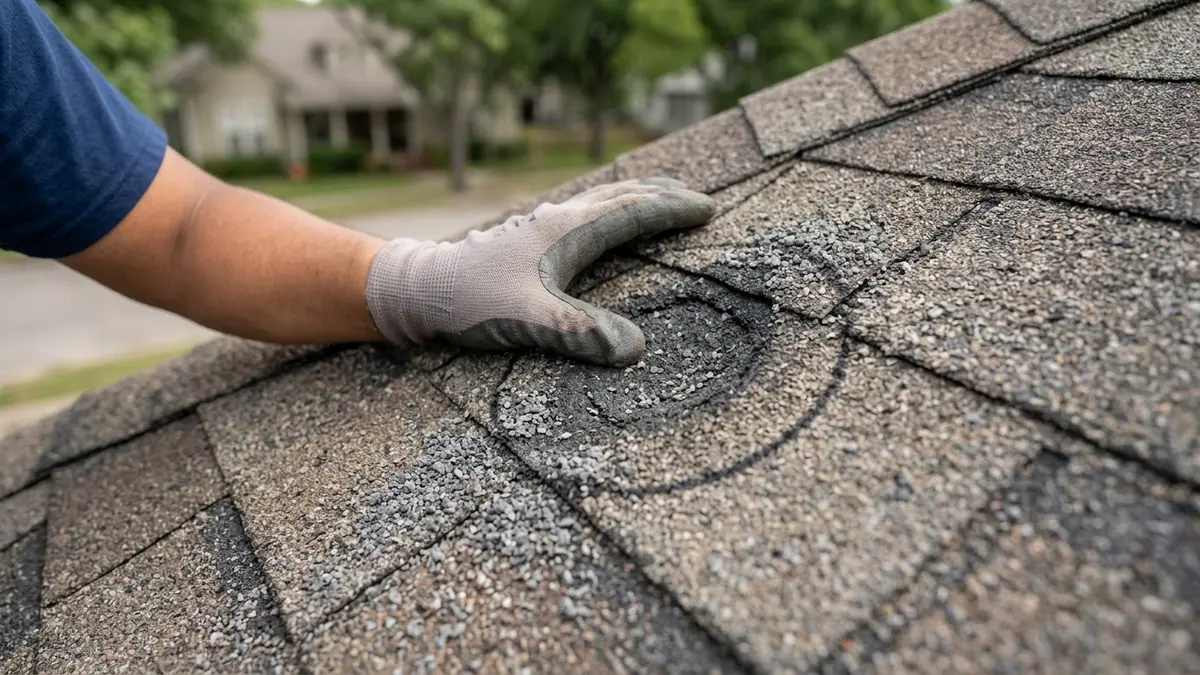
What hail actually does to a roof here is the sober version of the pitch.
The arithmetic that works is the credit compounded over the covering's life. Ask the carrier for the exact percentage in writing, check whether the cosmetic exclusion is attached to it, then compare that against the upgrade cost against the 2026 roofing costs before committing to it in a replacement scope.