
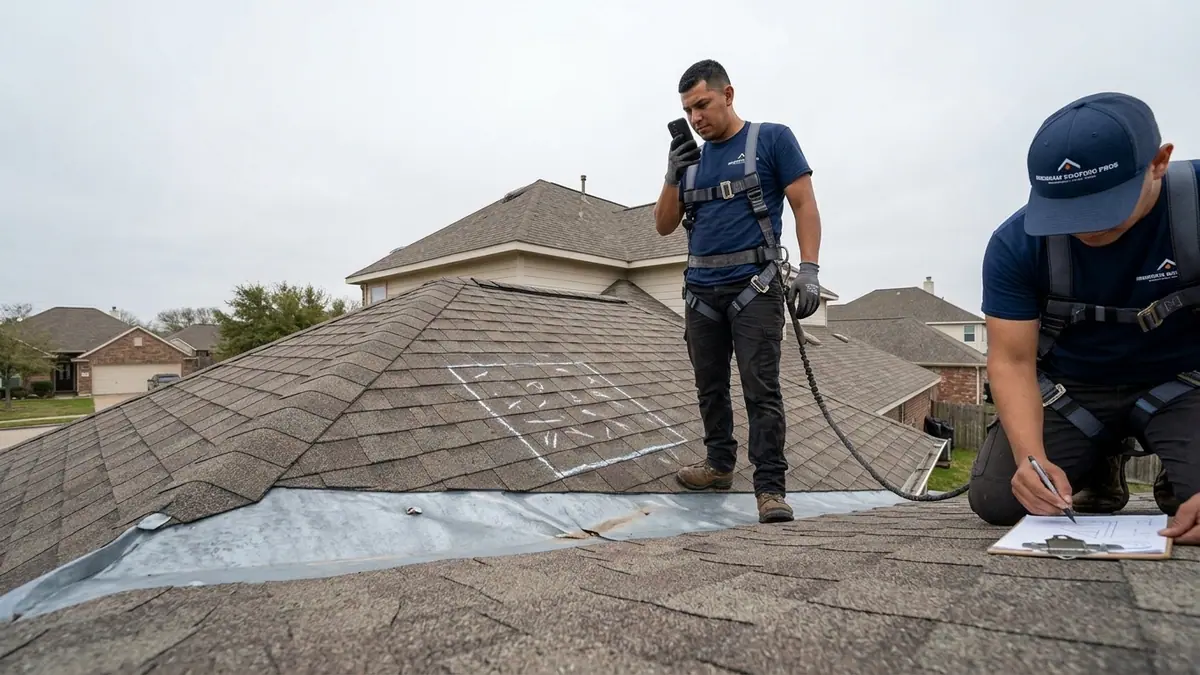
What is the adjuster actually deciding?
Whether the damage is sudden and accidental, or accumulated wear. Texas homeowner policies cover the first and exclude the second. A limb through the decking during a recorded storm is sudden. A pipe boot that hardened and split over a decade is maintenance.
Everything the adjuster does on the roof serves that one question. Date, cause and extent, in that order.
What gets examined on the roof
- Test squares. A marked ten-by-ten foot area on each slope, with strikes inside it counted. The count per square drives the scope.
- Directionality. Hail arrives on a wind, so genuine storm damage concentrates on one or two exposures. Damage spread evenly across all four slopes reads as wear.
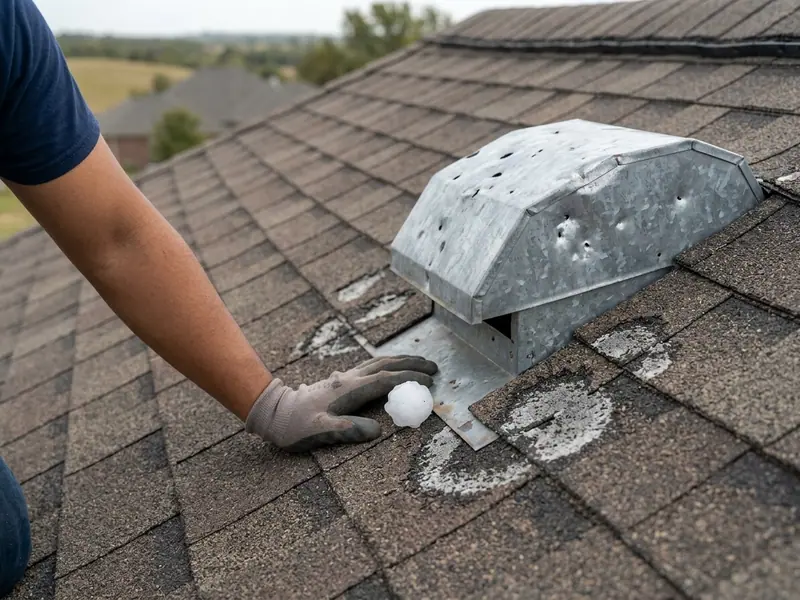
- Soft metal. Vent hoods, turbines, gutter aprons and downspouts dent at stone sizes that leave shingles looking intact. They corroborate the event.
- Collateral damage. Dented fence caps, window screens, AC condenser fins and mailboxes place the storm at the property.
- Covering age and general condition. A carrier applies depreciation against the covering's age, which affects what is paid even on an accepted claim.
What a homeowner should have ready
Dates and photographs, both from before and after. The file that settles a claim quickly contains:
- The date of the weather event, which for Washington County is on the National Weather Service record and is checkable by the carrier.
- Photographs taken the day of the damage, with timestamps intact, before anything was cleaned up.
- Prior-condition photographs, from an inspection before the storm. These do more work than any other document.
- Receipts for emergency work, such as tarping, which policies require the homeowner to carry out to prevent further damage.
- A roofer's written scope, with the defects named slope by slope.
Who is allowed to negotiate the claim?
The homeowner, or a licensed public insurance adjuster who is not doing the work. Texas Insurance Code § 4102.163(a) bars a contractor from acting as a public insurance adjuster, or advertising to adjust claims, for any property on which the contractor provides or may provide contracting services. The bar applies regardless of whether the contractor holds a license or has a power of attorney.
The Supreme Court of Texas upheld that provision in Texas Department of Insurance v. Stonewater Roofing on 7 June 2024. A roofing company that offers to handle, fight or maximize a claim on a roof it intends to replace is describing something Texas law does not permit.
The practical division is clean. The roofer documents the roof and prices the work. The homeowner talks to the carrier. Both sides of that are stronger for the separation.
Is the claim worth filing at all?
Compare the repair scope against the deductible before filing. Texas wind and hail deductibles run one to two percent of the dwelling value, so a $350,000 home carries $3,500 to $7,000 before the carrier pays anything.
Damage on a single slope of a newer covering frequently costs less to repair outright than that figure. Damage across every slope of an older covering rarely does. A documented inspection gives the number needed to make the comparison, and what follows a storm is set out in storm damage roof repair.